

30 December 2025
How much should you keep in your account to finish the month peacefully?
Many people have comfortable incomes but struggle to save regularly. In most cases, the problem is not the level of income, but the lack of a reliable reference point for what is actually available.
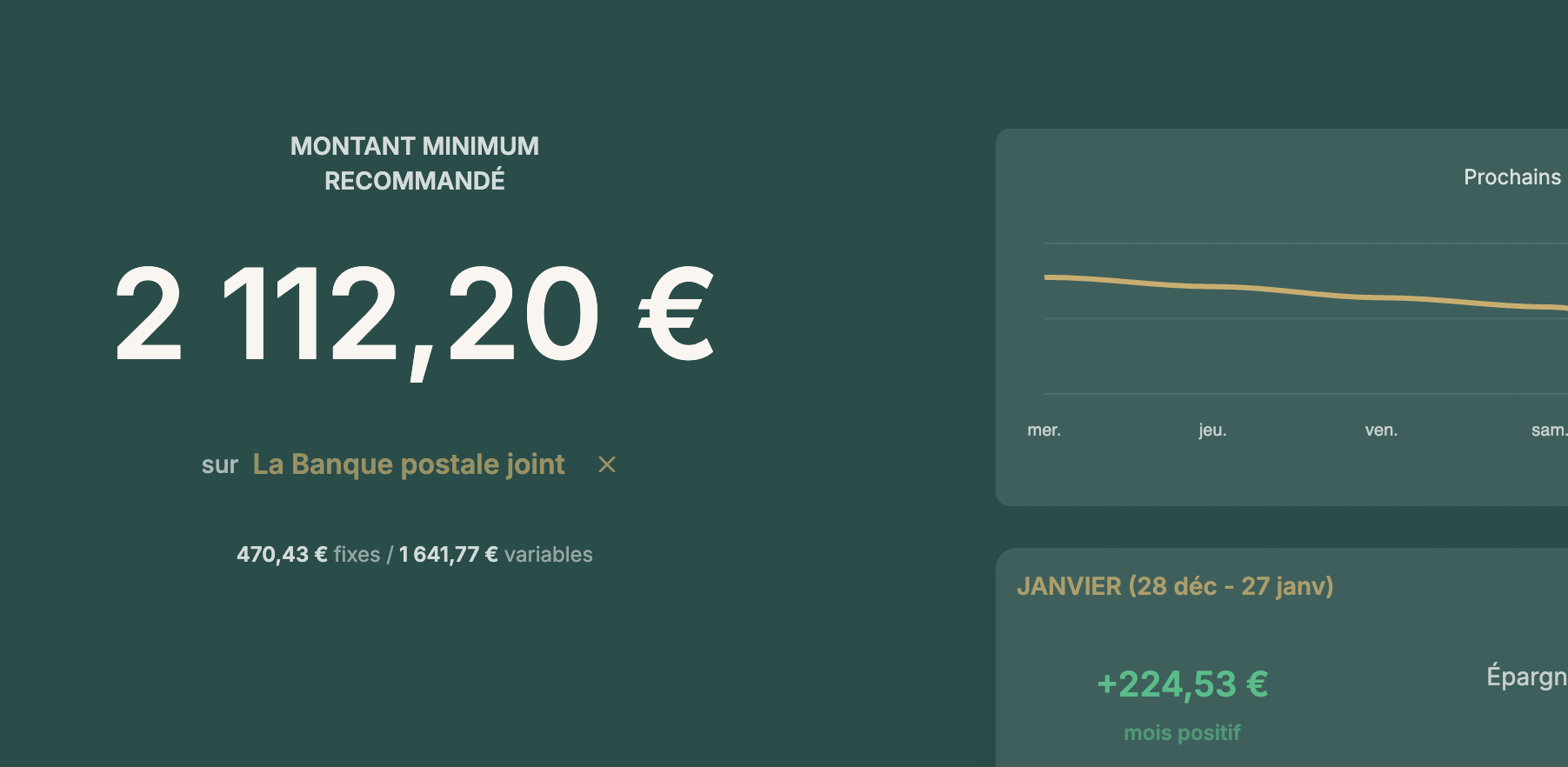
Your bank balance is not a good indicator
The amount displayed in a bank account does not take into account:
- expenses already committed but not yet debited
- non-monthly charges
- variations in expenses throughout the month
It reflects what has not yet been spent, not what can be spent safely.
What a budget should really include
To be useful on a daily basis, a budget must take into account all financial flows, including:
- fixed monthly expenses (housing, subscriptions, loans)
- variable expenses (groceries, transportation, leisure)
- irregular expenses (insurance, maintenance, annual or exceptional fees)
- income received during the period
Without this comprehensive view, it is difficult to anticipate and save peacefully.
Change your reference point to make better decisions
Rather than relying on the account balance, a more relevant reference point is to know the minimum amount to keep to cover all expected expenses until the next paycheck.
This reference point allows you to:
- immediately know if an expense is compatible with the budget
- identify periods when it is necessary to slow down
- visualize what can be saved as soon as income is received
A simpler and more stable approach
With a clear indicator that is regularly updated, budget management becomes more readable. Decisions are less stressful, trade-offs are faster, and savings become part of a sustainable approach.
And is there enough in your account?
List your expenses once, the monthly ones and the others. Yosanami works out the amount to keep in the account today, and tells you whether you are there.
Try it for free